What to check before you book a dune buggy desert drive
Booking a dune buggy outing is easy enough, but the details you check first shape the whole day. Desert driving is not the same as a normal road trip. Sand shifts, light changes, and the vehicle has to cope with heat, bumps, and long stretches of loose terrain. A little preparation helps you avoid mismatches, surprises, and time wasted asking questions on the day.
The best approach is to look at the booking as a set of practical choices. Think about who is driving, what level of comfort matters, how the route is managed, and what support exists if plans change. The points below keep the focus on things a general reader can reasonably ask before committing.
Basic booking details
What the booking actually includes
Start with the written details. Check the date, start time, meeting point, duration, and the type of vehicle named in the booking. A clear listing should make it easy to tell whether you are reserving a single buggy, a shared vehicle, or a separate vehicle for each driver. If the wording is vague, ask for plain confirmation before paying. Terms such as "ride", "drive", and "experience" can mean different things, so clarity matters.
Whether the activity suits the group
Not every traveller wants the same kind of desert outing. Some people want a gentle introduction, while others want a more active drive over sand dunes. Check age rules, driving requirements, passenger limits, and whether children can join. A group with mixed confidence levels may be better served by a calmer route or a slower pace. If someone in the group is uncomfortable with rough ground, say so early rather than hoping it works out on arrival.
Driver requirements and licence rules
A dune buggy is an off-road vehicle, and driving one still calls for basic competence. Check whether a driving licence is required, whether previous off-road experience is expected, and whether there are age limits for drivers. If instruction is provided, ask how much is included and whether it happens before the drive begins. A useful session should cover steering on sand, braking gently, keeping a safe distance, and what to do if the vehicle becomes stuck.

Safety and vehicle checks
Protective gear that fits properly
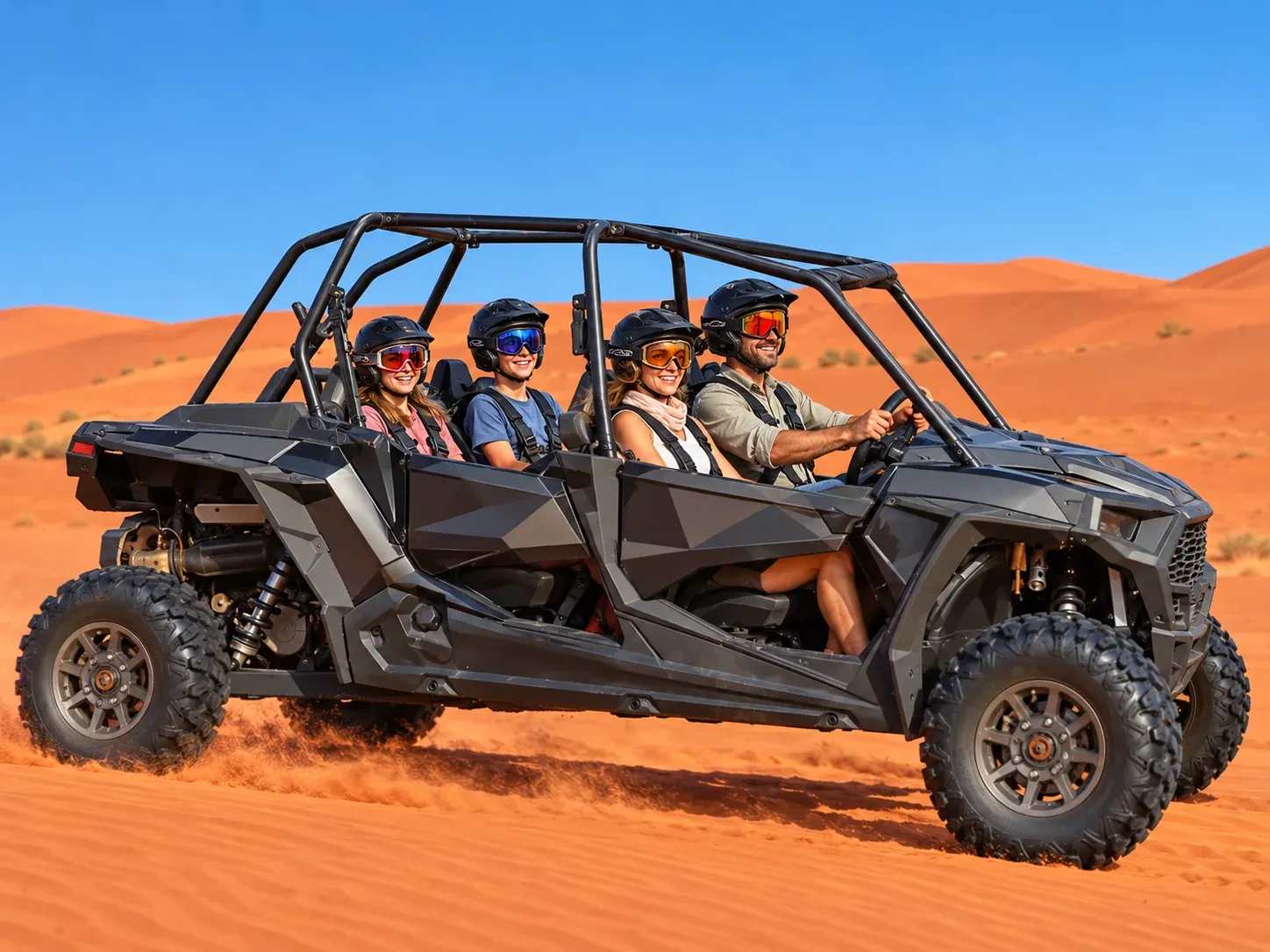
A helmet is a basic part of a sensible desert drive. A safety harness or seat belt should also be in working order and adjusted so it sits snugly without twisting. Ask what protective gear is supplied and whether sizes are available for the people in your group. Loose gear can be distracting, while missing gear turns a small mishap into a bigger problem. Closed footwear and sensible clothing are also worth planning for, especially in hot and dusty conditions.
Condition and type of the buggy
Ask what engine type the vehicle has and how that suits the route. Different buggies feel different on sand, especially when climbing or turning. A vehicle that is well maintained should start cleanly, steer predictably, and brake without pulling to one side. Visible wear is not always a warning sign in a desert setting, but damaged panels, worn straps, or an uneven idle deserve questions. Mechanical diagnosis is a job for a qualified professional, so leave technical repairs to the people responsible for the vehicle.
Tyre pressure and ground handling
tyre pressure affects how a buggy behaves on desert terrain. Lower pressure can help the vehicle float over soft sand, while too much pressure can make it dig in. Drivers may adjust pressure as part of normal preparation, but travellers do not need to make guesses or interfere with equipment. The useful question is whether pressure checks are part of the operating routine and how the driver handles soft patches, slopes, and sudden turns.
Driving techniques used on the route
Good driving techniques matter more than speed. On sand, smooth steering and steady momentum usually work better than sharp turns or hard acceleration. Check whether the route includes steep climbs, narrow tracks, or fast open sections, and ask how drivers are briefed on these. If you are new to off-road driving, a clear explanation before departure is more valuable than a dramatic sales pitch. Confidence grows when expectations are realistic.
Route, timing, and comfort
Where the drive starts and where it goes
A desert booking can cover very different ground depending on the area and route. Ask where the drive starts, how long the transfer takes, and what kind of landscape is expected. Some routes focus on rolling sand, others include harder tracks or open stretches. Check whether the route is shared with other vehicles or kept to a smaller group. This affects noise, dust, waiting time, and the general feel of the outing.
Before you compare options, it helps to understand how the term Dune Buggy Dubai is used in a general travel context. It usually points to an off-road desert activity rather than a road vehicle hire, so the route, safety arrangements, and driving format deserve more attention than the label alone.
Time of day and weather
Desert conditions change across the day. Midday heat can be tiring, while late afternoon light changes visibility and can make the drive feel quite different. Ask what time slots are available and how heat is managed during the outing. Water, shade, and rest stops may matter more than people expect. If weather causes disruption, check whether there is a clear process for changes or postponement. A sensible plan should not rely on perfect conditions.
Comfort, luggage, and personal items
Find out what can be carried on the buggy and what should be left behind. Phones, cameras, keys, and loose bags need a secure place, as dust and vibration are part of the setting. Loose items can also interfere with driving. Ask whether storage is available and whether there are restrictions on bags. Sun protection, eyewear, and a scarf or face covering can make the day more comfortable in dusty conditions.
Practical checks before payment
- Cancellation and changes: Read the terms for cancellations, date changes, late arrival, and weather disruption. Clear rules are easier to manage than assumptions.
- Insurance and liability: Ask what cover applies, what it excludes, and who is responsible for damage. Do not rely on a vague mention of insurance.
- Meeting arrangements: Confirm the exact meeting point, arrival time, and what happens if you are delayed. This reduces stress on the day.
- Group structure: Ask whether the drive is private, shared, or mixed with other activities. This shapes pace, attention, and waiting time.
- Confirmations in writing: Keep the booking confirmation and any answers to specific questions. Written details help when plans need checking later.
Questions that reveal quality
The most useful questions are often plain ones. Ask how beginners are briefed, how the pace is set, what happens if a driver struggles, and how the route changes when sand conditions are difficult. Listen for answers that are specific and calm. A responsible approach to an off-road vehicle should focus on control, preparation, and clear communication rather than speed alone.
It is also worth asking how the group is organised from arrival to return. A smooth booking should make clear who gives the briefing, when safety gear is checked, where passengers wait, and how the drive ends. These details may sound ordinary, but they prevent confusion. When the practical side is settled, the time in the sand dunes is easier to enjoy.
Matching the outing to your expectations
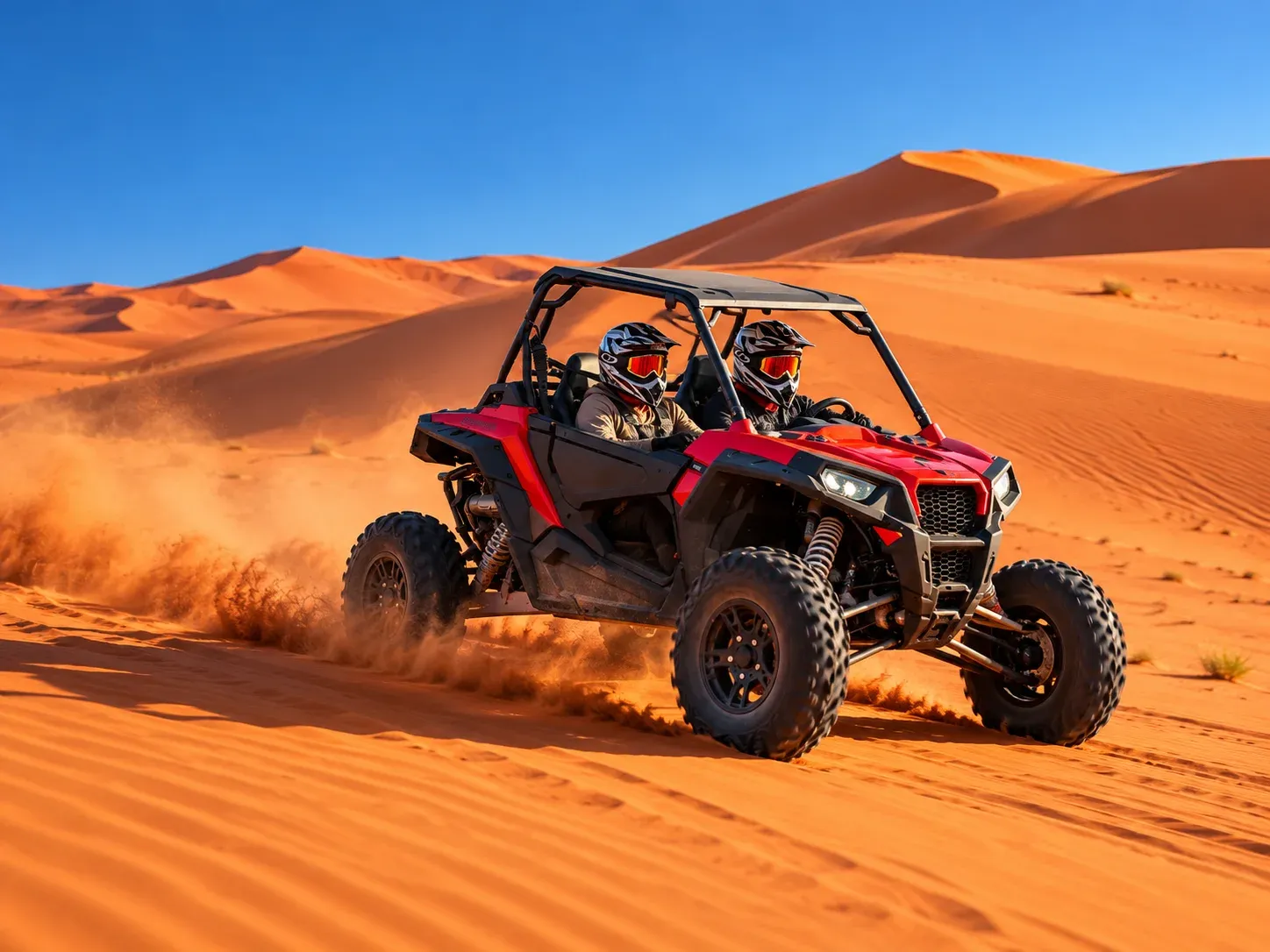
Before making the final choice, decide what kind of day you want. A short introductory drive suits people who want a taste of desert motoring. A longer outing may suit those who enjoy rough ground and are comfortable with dust, heat, and a more physical pace. Check whether photography stops are part of the route, whether there is time to pause, and whether the pace allows the group to stay together.
Comfort and thrill rarely sit in equal measure. Faster driving can feel exciting but reduces the chance to take in the landscape. Slower driving gives more control and a better sense of the terrain, especially for first timers. The right choice depends on the group, not on the most dramatic description.
A final read of the small print
Once the main points are clear, read the booking terms once more. Check the date, the name used for the activity, the number of participants, the start time, and any conditions attached to the reservation. Pay attention to wording about refunds, substitutions, and safety decisions. If anything feels unclear, ask before the day arrives rather than trying to resolve it beside the vehicle.
A dune buggy day can be straightforward when the basics are understood. Confirm the driving rules, the route, the safety gear, the vehicle arrangement, and the terms of the booking. Those checks take little time and help you choose an outing that fits the people going, the conditions expected, and the kind of desert drive you actually want.